
"coffee growing map"
700 article(s) found

Distribution Map of Coffee planting areas in the World-Coffee planting Distribution Map of Yunnan
Map of Coffee growing areas in Yunnan the frost in 1975 destroyed most coffee crops in Brazil, but stimulated the development of coffee in Papua New Guinea. The Government has implemented a scheme to finance the creation of about 20 hectares of coffee plantations in rural or collective land ownership. This measure does increase the infiltration of coffee in the local economy.

Asian Fine Coffee planting Distribution Map-Yunnan Coffee planting Distribution Map
Asian Fine Coffee planting Distribution Map-Yunnan Coffee planting Distribution Map Yunnan coffee was first introduced by French missionaries in 1902. Up to now, there are still 24 coffee trees more than 90 years old in Zhukula Township, Binchuan County. In 1914, the border people of the Ruili Jingpo nationality were introduced from Burma to Nongxian Village. Tibika and Bobang, two classic high-quality coffee varieties, are the main cultivated varieties of coffee in Yunnan. Due to
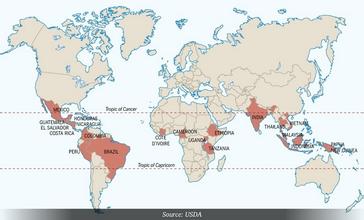
The World Coffee Map explains in detail the specific distribution points and geographical names of the world coffee map.
Costa Rican coffee has full grains, ideal acidity and unique strong aroma. Tarrazu of Costa Rica is one of the major coffee producing areas in the world. Costa Rica, with its fertile volcanic soil and good drainage, is the first country in Central America to grow coffee and bananas for commercial value. Coffee and bananas are
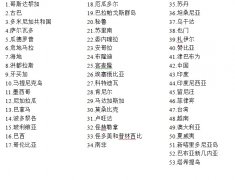

About Coffee World Map
COFFEE WORLD MAP Most coffee production areas are located between the Tropic of Cancer, that is, 25 degrees north of the equator and 30 degrees south of the equator in the tropics or subtropics. Areas with an annual average temperature of 16-25 degrees Celsius, frost-free and rainfall of 1600-2000 mm. At present, there are more than 70 major coffee producing countries, and the Greater China is located at an altitude of 300-400 meters.
Introduction of Coffee beans Distribution Map of Coffee growing areas in the World
1. Costa Rica Costa Rica 2. Cuba Cuba 3. Dominican Republic Dominican Republic 4. Ei Salvador El Salvador 5. Guadeloupe Guadeloupe 6. Guatemala Guatemala 7. Haiti Haiti 8. Honduras Honduras 9. Jamaica Jamaica 10. Martinique Martinique 11. Mexico Mosi

Coffee Belt (COFFEE WORLD MAP) Coffee trees grow around the equator
Coffee trees grow in tropical or subtropical agricultural gardens centered around the equator and called coffee belts. Most of the coffee production is between the Tropic of Cancer, 25 degrees north of the tropical or subtropical equator and 30 degrees south of the equator. An area with an annual average temperature of 16-25 degrees Celsius, no Frosts Descent and rainfall of 1600-2000 mm. At present, coffee is mainly produced by seven countries.
World Map of Coffee beans
There are shadows of coffee beans in many parts of the world, and they can grow normally as long as the climate is right. These places suitable for the cultivation of coffee beans, usually located between the Tropic of Cancer and the Tropic of Cancer, are called coffee growth zones. R: Robusta coffee beans M: mixed coffee beans A: Arabica coffee beans

The globally recognized coffee Bible of the World Coffee Map was introduced to China for the first time.
"Coffee Map of the World" / 198 yuan (English) James Hoffman, a god-man in the coffee world published by Citic Publishing House in July 2016, once suffered from being unable to find a comprehensive and readable book on coffee knowledge, so he simply wrote one of his own. this is the globally recognized great coffee bible "World Coffee Map". When you check Amazon websites in the United States, the United Kingdom and other countries, you will
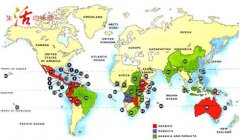
Map of global coffee producing area for the production of boutique coffee beans
Coffee trees grow in tropical or subtropical agricultural gardens centered around the equator and called coffee belts. Most of the coffee production is between the Tropic of Cancer, 25 degrees north of the tropical or subtropical equator and 30 degrees south of the equator. An area with an annual average temperature of 16-25 degrees Celsius, no Frosts Descent and rainfall of 1600-2000 mm.

Flavor characteristics of coffee beans in Xueqi map processing factory in Yega Xuefei coffee producing area, Ethiopia
Sunburn Yega Chuefei G1 snow map Mestawe Asfa processing plant EthiopiaNaturalYirgacheffeChelelektu-MestawotAsefa high altitude clear smell of jasmine, with warm and rich comprehensive fruit juices (strawberry jam, passion fruit

Introduction to the characteristics of Flavor and Taste quality of Brazilian Coffee Bean planting Map
Brazilian coffee beans grow top Brazilian coffee on a map that may not always be easy to get. Because, after the United States, Brazil itself has become the world's largest consumer of coffee and is still growing rapidly. A large number of high-quality coffee has found a place in the domestic market, and consumers' tastes are becoming more and more picky. Brazil's rapid development in the coffee industry may be attributed to regular hosting in Brazil.

Characteristics of taste distribution map of Panamanian coffee beans
Panamanian coffee bean processing characteristics Panama has been among the best coffee producers in the world since three years ago, which has surprised countries that have been in the vanguard of developer production for many years. Panamanian coffee is mainly produced in the west near the Costa Rican border, producing the best washed coffee. Compared with coffee beans grown at low and middle elevations

Brazilian Coffee Bean planting Base Map-introduction of Brazilian Bourbon Rivida Coffee beans
Brazilian Coffee Bean planting Base Map-Brazilian Bourbon Rivida Coffee Bean introduction Top Brazilian coffee may not always be easy to get. Because, after the United States, Brazil itself has become the world's largest consumer of coffee and is still growing rapidly. A large number of high-quality coffee has found a place in the domestic market, and consumers' tastes are becoming more and more critical of Brazil's long hair in the coffee industry.

Introduction to the Distribution Map of Environmental Base in Yunnan Coffee planting area
When was Yunnan coffee first planted? the environmental base distribution map shows that more than 80% of China's coffee is grown in Yunnan. Yunnan has four or five growing areas, including Ruili and Baoshan. Robasta coffee is also grown on the southern coast of Fujian and Hainan Island near Vietnam. At present, coffee production in Fujian and Hainan is very low, Youensen said. Yunnan is naturally the best in China.

Structure decomposition Map of Coffee Fruit-description of Flavor in planting Environment and region
Structure decomposition Map of Coffee Fruit-Fruit structure of Coffee-the flavor description of the growing environment and the taste of some coffee fruits have only one seed (5%-20% of the total), which is caused by fertilization or environmental factors, resulting in a serious deterioration of the seed growth on one side, which looks round (in this case, the seeds on the other side will not be produced), this round coffee bean, we call it.

Burmese Coffee Map introduction of Burmese Coffee varieties what kind of coffee is there in Myanmar?
Professional coffee knowledge exchange more coffee bean information Please follow the coffee workshop (Wechat official account cafe_style) Burma began to grow coffee beans in 1885, but for nearly a hundred years, there has been no sign of export or business. In the middle and late twentieth century, the United Nations Drug abuse Control Program (UNDCP) was launched to encourage Burmese farmers to give up opium poppy cultivation.

Colombian coffee bean flavor map rich flavor Colombian coffee
The exchange of professional baristas please follow the coffee workshop (Wechat official account cafe_style). It is said that the coffee seeds of the 19th century were brought to Colombia by Jesuit priests from Venezuela and Guyana. For the first time, coffee is grown in eastern Colombia. The second half of the 19th century. Colombian coffee has expanded to the international market. Gradually, the United States became the most important coffee.

Coffee Belt (COFFEE WORLD MAP) Coffee beans are generally grown at what latitude?
Most of the coffee production is between the Tropic of Cancer, 25 degrees north of the tropical or subtropical equator and 30 degrees south of the equator. An area with an annual average temperature of 16-25 degrees Celsius, no Frosts Descent and rainfall of 1600-2000 mm. At present, coffee is mainly produced in more than 70 countries. The Big self is located at an altitude of 300,400m, sometimes between 2000 and 2500 meters above sea level.
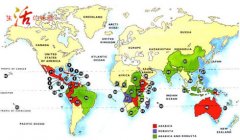
Analysis of global coffee producing area map analysis of coffee bean production area
Coffee trees grow in tropical or subtropical agricultural gardens centered around the equator and called coffee belts. Most of the coffee production is between the Tropic of Cancer, 25 degrees north of the tropical or subtropical equator and 30 degrees south of the equator. An area with an annual average temperature of 16-25 degrees Celsius, no Frosts Descent and rainfall of 1600-2000 mm.